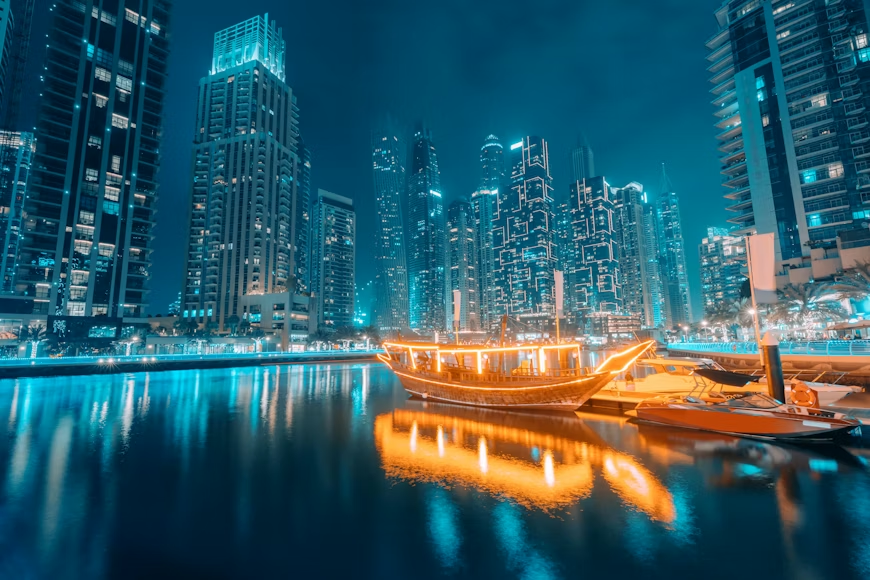
Downtown Dubai isn't just a district; it's a statement. Often hailed as "The Centre of Now," this 500-acre flagship development by Emaar Properties has single-handedly redefined the Middle Eastern skyline, creating a vertical metropolis that pulses with energy day and night. It serves as both the tourism magnet and the cultural soul of the emirate.
With the Burj Khalifa acting as its anchor, Downtown Dubai stands as a testament to what happens when ambitious vision meets flawless execution. For residents, it offers a lifestyle unmatched in convenience and prestige. For investors, it remains one of the region's most stable and high-yielding real estate markets. This guide explores the intricate fabric of Downtown, from its distinct residential precincts to its robust investment potential.
The Vision & Evolution
Born from a bold vision in the early 2000s, Downtown Dubai was designed to be the ultimate mixed-use complex—a place that would completely reimagine urban living. Unlike the suburban sprawl seen elsewhere, Downtown was built with walkability and connectivity at its core. The Burj Khalifa wasn't just built to break records; it was built to anchor a community. Around it, a carefully curated ecosystem of hospitality, retail, and residential sectors has flourished.
Today, the district has fully matured, yet it continues to evolve. The addition of the Opera District has injected a vibrant dose of culture, while continuous upgrades to Sheikh Mohammed Bin Rashid Boulevard ensure the street-level experience remains dynamic. It is a place where high-powered business intersects with leisure—where you can work in a Grade A office in Emaar Square by day and stroll to a world-class opera performance by night.
Architectural Masterpieces
While the Burj Khalifa naturally commands attention, the architectural language of Downtown is surprisingly diverse. The tower itself, soaring 828 meters into the sky, is a marvel of engineering that houses the Armani Hotel and ultra-luxury residences. However, the surrounding architecture provides a fascinating and deliberate contrast.
The Old Town, a low-rise residential cluster, offers a stark juxtaposition to the glass behemoths. Designed with traditional Arabic architecture—utilizing earth tones, arches, and wind towers—it provides a village-like atmosphere nestled within the metropolis. Meanwhile, newer additions like The Address Sky View, with its iconic sky bridge, and Il Primo in the Opera District, continue to push the boundaries of modern luxury design.
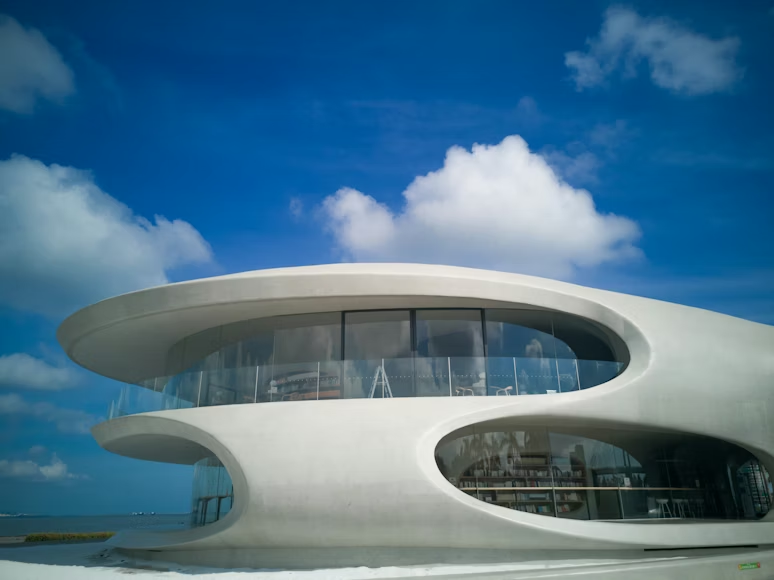
Where tradition meets the future.
Residential Precincts: Where to Live
Downtown Dubai is divided into several distinct districts, each offering a unique living experience. Selecting the right building is crucial for both residents and investors to match their lifestyle needs.
- Burj Khalifa District Living in the Burj Khalifa itself or its immediate surroundings (The Address Downtown, The Address Boulevard) offers the pinnacle of prestige and service. These are often fully serviced apartments complete with concierge facilities.
- The Opera District Considered the cultural soul of the area, towers here—such as Opera Grand and Il Primo—offer front-row seats to the Dubai Fountain and unhindered views of the Burj Khalifa. This represents some of the most premium square footage in the city.
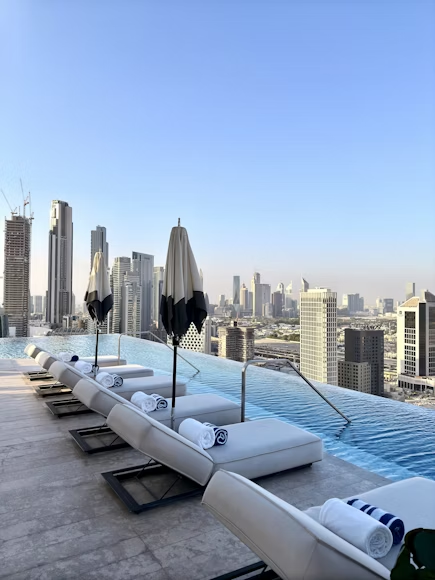
Unrivaled views from your private sanctuary.
- Old Town & Old Town Island Perfect for those who prefer low-rise living. These pedestrian-friendly zones feel like a resort, featuring lush landscaping, traditional souks, and a quieter pace of life, all while being just steps away from Dubai Mall.
- Sheikh Mohammed Bin Rashid Boulevard Residences lining the boulevard, such as Standpoint, Claren, and 29 Boulevard, offer a truly urban, cosmopolitan vibe. Residents can step out directly onto the 3.5km strip lined with trendy cafes and restaurants.
The Retail & Culinary Experience
At the heart of the district lies The Dubai Mall, the world’s largest destination for retail, entertainment, and leisure. With over 1,200 retail outlets, two anchor department stores, and hundreds of food and beverage options, it functions as a city within a city. The Fashion Avenue extension has firmly established it as the luxury capital of the region.
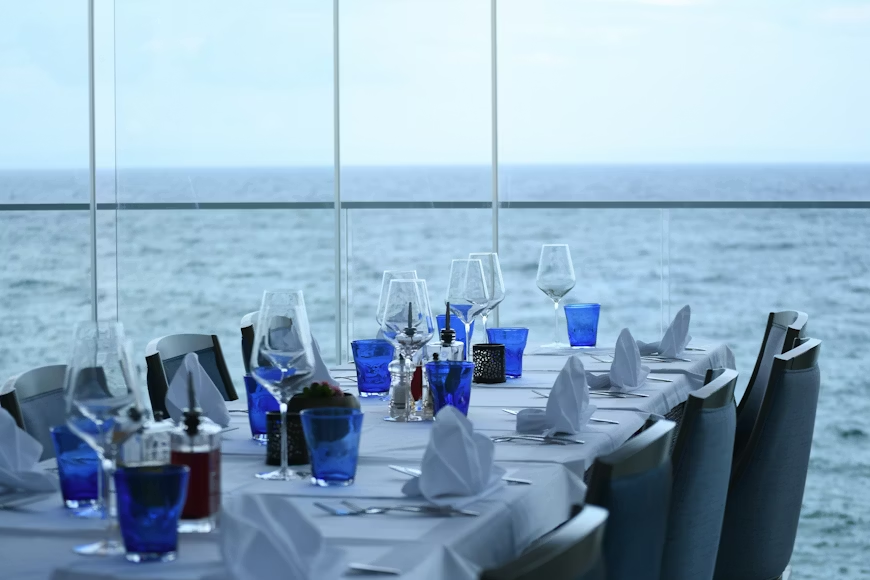
World-class dining and entertainment.
However, the culinary scene extends far beyond the mall's food courts. Souk Al Bahar, connected by a bridge over Burj Lake, offers waterfront dining with spectacular fountain views. The Boulevard is home to homegrown concepts and international chains like La Serre and Cipriani. For fine dining, the hotels in the area—including the Armani Hotel and The Palace Downtown—host some of the city's top-rated restaurants, such as At.mosphere on level 122 of the Burj Khalifa.
Investment Potential & ROI
Downtown Dubai endures as a blue-chip investment haven. Its status as a global landmark ensures that demand for short-term rentals (holiday homes) remains robust year-round, driven by a steady stream of business travelers and tourists.
Capital Appreciation: As one of the most fully developed areas, land scarcity is becoming a significant factor. New launches are limited and primarily concentrated in the Opera District or on the periphery (Downtown Views). This scarcity naturally protects the value of existing assets.
Rental Yields: Investors can typically expect gross yields between 5% and 7% for long-term rentals. However, short-term rentals, when managed correctly, can push yields significantly higher—particularly for units with Fountain or Burj Khalifa views. "Address" branded residences typically command a 20-30% premium over non-branded units due to their exceptional service quality and reputation.
Connectivity & Future Outlook
Downtown occupies a strategic position along Sheikh Zayed Road (E11) and Financial Centre Road. It borders the Business Bay financial district, making it a favorite for white-collar professionals. The Dubai Metro (Red Line) services the area, and an air-conditioned metro link bridge connects the station directly to the mall for seamless access.
Looking ahead to the Dubai 2040 Urban Master Plan, Downtown Dubai is classified as a primary urban center. The focus will be on enhancing sustainability, increasing green spaces, and improving pedestrian mobility. The continued development of the Opera District will finalize the cultural offering, cementing Downtown's status not just as a tourist hub, but as the sophisticated heart of a mature global city.